

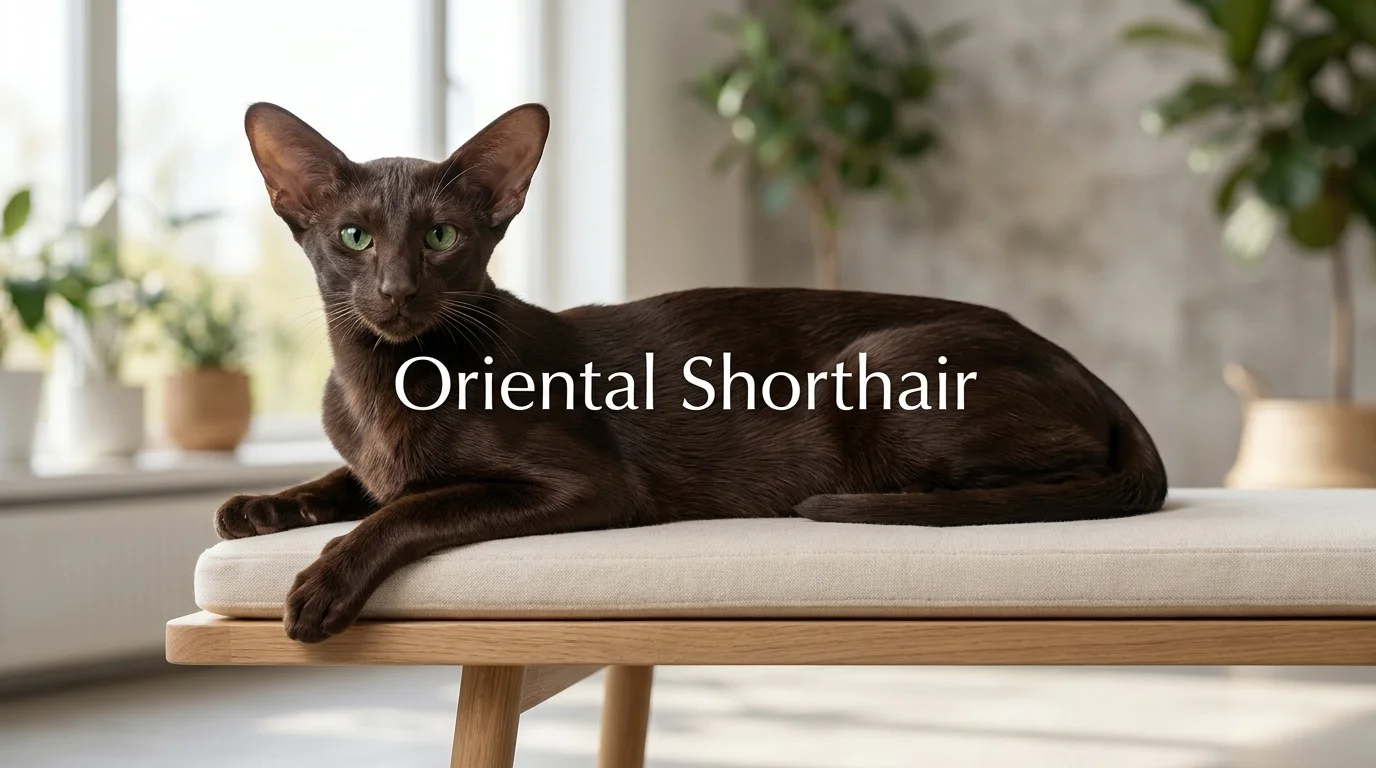
The Oriental Shorthair is difficult to mistake for another cat. Its oversized ears, wedge-shaped head, long athletic body, and sleek coat create a distinctive appearance, but its personality is just as noticeable as its looks. This is an intelligent, affectionate, highly social breed that tends to want an active role in whatever its people are doing.
For the right household, that combination can make the Oriental an entertaining and deeply involved companion. For someone hoping for an independent cat that quietly sleeps through most of the day, however, its need for interaction and tendency to vocalize can be a poor match. Understanding the breed’s activity level, health considerations, grooming needs, and social nature before bringing one home can prevent surprises later.
Quick answer: The Oriental Shorthair is a medium-sized, short-coated member of the Siamese breed group known for being intelligent, active, affectionate, and unusually vocal. These cats need regular interaction, play, and companionship, while their sleek coats are comparatively easy to maintain.
Quick Facts at a Glance
| Trait | What to expect |
|---|---|
| Size | Medium-sized, long and slender |
| Typical female weight | About 5–8 pounds |
| Typical male weight | About 8–12 pounds |
| Lifespan | Often around 12–15 years; some live longer |
| Coat | Very short, sleek, glossy, close-lying |
| Colors | Hundreds of color and pattern combinations |
| Temperament | Affectionate, playful, intelligent, social |
| Vocal level | High |
| Grooming | Low to moderate; weekly grooming is usually enough |
| Activity level | High |
| Best home | Interactive household with plenty of companionship |
TICA lists females at approximately 5–8 pounds and males at about 8–12 pounds, while PetMD gives an average lifespan of roughly 12–15 years. TICA also notes that individuals within the Siamese breed group can sometimes live considerably longer.
What Is an Oriental Shorthair?
The Oriental belongs to the same general breed group as the Siamese, Balinese, and Oriental Longhair, and the resemblance is obvious in its long body, angular head, and prominent ears. What most clearly distinguishes the shorthaired Oriental is the combination of a Siamese-style body with a short coat available in a remarkable range of colors and patterns. TICA lists hundreds of possible combinations, while CFA likewise emphasizes the breed’s unusually broad range of colors.
The modern breed traces its development largely to England in the years after World War II. Breeders crossed Siamese cats with other breeds and domestic cats, including Russian Blues, British Shorthairs, and Abyssinians, then bred the resulting cats back toward the Siamese type while retaining non-pointed colors. Orientals arrived in the United States in the 1970s, and CFA granted the breed championship status in 1977.
Personality and Temperament
These cats are strongly people-oriented and tend to be much more involved with daily household activity than a stereotypically independent feline. TICA describes them as affectionate, lively, intelligent, playful, and closely bonded to their families, and notes that many follow their owners around and actively seek attention. They often enjoy laps, beds, games, climbing structures, and simply being wherever their people are.
Their vocal nature deserves special attention because it can influence whether the breed is a good fit for your lifestyle. Many Orientals regularly “talk” to their people and may respond vocally when they want food, play, attention, or company, so owners who prefer a very quiet home should consider this before adopting one. Their intelligence also means boredom can quickly turn into climbing, investigating cabinets, knocking over objects, or inventing other forms of entertainment.
What Does This Breed Look Like?
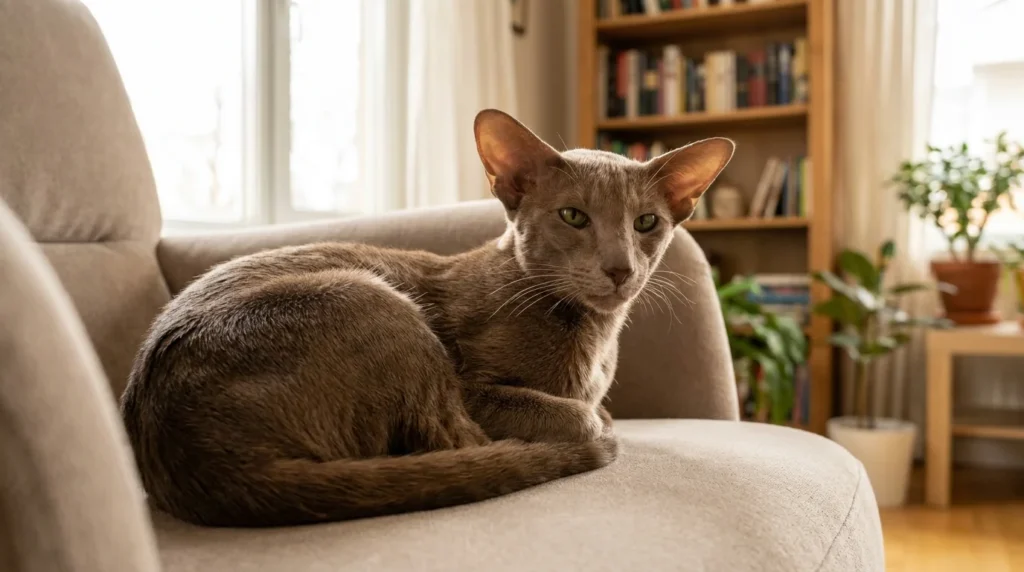
The breed has a long, refined silhouette that can make it appear delicate at first glance, although these cats are muscular and athletic beneath their narrow frame. A typical Oriental has a long, wedge-shaped head, a straight profile, almond-shaped eyes, very large broad-based ears, long legs, and a thin, tapering tail. TICA describes the ideal body as graceful and svelte without being weak or bony.
Coat variety is one of a breed’s signature features, with solid, tabby, tortie, torbie, smoke, silver, and parti-color combinations recognized by breed organizations. Green is the preferred eye color in many Orientals. However, eye-color requirements can vary with coat color, particularly in white cats. This huge palette explains why two cats of the same breed can look dramatically different while sharing virtually the same body structure.
Grooming, Diet, and Daily Care
Nutrition
There is no breed-specific food that all Orientals need, so owners should focus on complete, balanced nutrition appropriate to the cat’s age and health. In the United States, AAFCO recommends checking the nutritional adequacy statement to confirm that a cat food is formulated for the relevant life stage, such as growth, adult maintenance, or all life stages. Portion size should then be adjusted according to the individual cat’s weight, activity level, condition, and veterinary advice, rather than unthinkingly relying on the package recommendation.
Exercise and Mental Stimulation
A short play session once every few days is unlikely to satisfy this breed’s curiosity. Orientals benefit from daily interactive play, climbing opportunities, puzzle feeders, scratching surfaces, and toys that allow them to chase, retrieve, stalk, or problem-solve. TICA notes that many enjoy fetch and remain playful well into adulthood, making environmental enrichment especially important in indoor homes.
Grooming
The sleek coat is one of the easier parts of Oriental care, as it typically es not require professional grooming. CFA recommends approximately weekly grooming for shorthaired Orientals, using an appropriate brush or grooming tool to remove loose hair and maintain coat condition. Owners should also keep up with routine nail and dental care, and periodic checks of the ears, eyes, skin, and coat for any unusual signs.
Companionship
Social needs are arguably more demanding than coat care for this breed. TICA specifically notes that Orientals need companionship and may become unhappy or mischievous when left alone for prolonged periods, with many doing well in homes that include another compatible cat or a cat-friendly dog. That does not mean every Oriental requires a second pet, but prospective owners should realistically assess how much interaction the household can provide each day.
Health and Lifespan
Many individuals remain healthy for years, and PetMD places the breed’s average lifespan at roughly 12–15 years. However, breed-related concerns can include amyloidosis and inherited retinal degeneration, while CFA notes that progressive retinal atrophy can be identified through genetic testing. Responsible preventive care therefore includes regular veterinary examinations and a discussion with a breeder about genetic screening and health history when purchasing a kitten.
PetMD also notes that some Siamese-related cats can develop pica, a behavior involving chewing, sucking, or eating non-food items. Because swallowed fabric, string, plastic, or other objects may pose a risk of poisoning or intestinal obstruction, persistent pica should be discussed with a veterinarian rather than treated simply as a behavioral quirk. Any sudden change in appetite, vomiting, severe lethargy, vision problems, abdominal swelling, or other concerning symptoms also warrant a professional veterinary assessment.
Are These Cats Hypoallergenic?
Despite claims sometimes made about low-shedding breeds, an Oriental should not be considered truly hypoallergenic. The American College of Allergy, Asthma & Immunology states that all cats produce allergens found in their skin, fur, and saliva and that research has not established genuinely hypoallergenic cat breeds. Someone with significant cat allergies should therefore spend time around the individual cat and speak with an allergist before assuming that its short coat will prevent symptoms.
Are They Good With Children, Cats, and Dogs?
A well-socialized Oriental can be an excellent companion in a busy family because many enjoy attention, play, and household activity rather than hiding from it. TICA reports that the breed generally does well with children, other cats, and cat-friendly dogs, although individual temperament still matters. Introductions between pets should always be gradual so each animal has time and space to adjust without being forced into immediate contact.
The more important question is often whether the family wants the level of interaction these cats provide. A household that enjoys training, playing, talking to its pets, and having a feline companion nearby much of the day may find the breed particularly rewarding. A home where everyone is regularly absent for extended periods may need to plan for more enrichment, companionship, or a breed with a more independent temperament.
How Much Does This Breed Cost in the US?
Purchase prices vary considerably by breeder, location, pedigree, age, health testing, and whether a kitten is sold as a companion or potential show cat. A June 2026 Catster cost guide estimated roughly $600–$3,000 from a breeder and approximately $50–$350 through adoption, though real-world prices can fall outside those ranges. Buyers should therefore treat online price ranges as budgeting estimates rather than fixed market rates.
The purchase price is only one part of the financial commitment because owners also need to budget for food, litter, routine veterinary care, vaccinations, parasite prevention when appropriate, toys, scratching surfaces, dental care, and emergency treatment. Highly active cats may also need more enrichment equipment than a quieter breed, including a sturdy cat tree and regularly rotated toys. Pet insurance or a dedicated emergency fund can help make unexpected veterinary costs easier to manage, but neither replaces routine preventive care.
How to Choose a Breeder or Rescue
Because health and early socialization can affect a cat for years, choosing where the cat comes from deserves as much attention as choosing its color. TICA provides a breeder directory for members who have agreed to its Code of Ethics, while CFA also offers breeder resources for people searching in the United States. A trustworthy breeder should be willing to discuss the parents, health history, genetic testing, veterinary care, living conditions, socialization, and what happens if an owner can no longer keep the cat.
Useful questions include:
- Which genetic and health tests have been performed on the parents?
- Can I see health records and vaccination documentation?
- Can I meet the mother or see where the kittens are raised?
- At what age can the kitten go home?
- What health guarantee or contract is provided?
- How have the kittens been socialized with people and normal household activity?
- Will the breeder take the cat back if circumstances change?
- Are references from previous buyers available?
Rescue is also worth checking, although purebred Orientals may be less common in shelters than domestic shorthairs. Breed-specific rescues, Petfinder listings, local shelters, and regional cat organizations can all provide potential leads, and an adult ccat’sestablished personality is often easier to evaluate than a young kitten’s. Never send money solely because an online seller claims a rare color is available immediately, especially when the seller will not provide verifiable records or allow reasonable questions.
Preparing Your Home
Before bringing the cat home, set up food and water areas, litter boxes, a secure carrier, scratching posts, vertical climbing space, beds, hiding areas, and several types of toys. Because this breed likes height and exploration, owners should secure breakable objects and unsafe cords rather than assume the cat will ignore them. Readers looking for additional animal-care content can also explore the Neoazine Pets section as the site’s pet library expands.
Is an Oriental Shorthair Right for You?
The Oriental Shorthair offers far more than its dramatic ears and elegant silhouette. It is best suited to people who actively want an intelligent, playful, vocal, affectionate cat and are prepared to provide daily attention, enrichment, preventive veterinary care, and companionship. If that sounds appealing rather than exhausting, this distinctive member of the Siamese family can become an unusually interactive and devoted part of the household.
Frequently Asked Questions
How big does an Oriental Shorthair get?
The breed is considered medium-sized despite its unusually long legs and body. TICA lists adult females at approximately 5–8 pounds and males at around 8–12 pounds. The long, narrow build can make a cat appear larger or taller than its actual weight suggests.
How long do these cats live?
PetMD reports an average lifespan of 12–15 years, while TICA lists a life expectancy of 10+ years and notes that some members of the Siamese breed group live substantially longer. Genetics, preventive veterinary care, nutrition, body condition, environment, and individual health all influence longevity. No lifespan estimate can predict how long a particular cat will live.
Do they meow a lot?
Yes, vocal communication is one of the breed’s most consistently described personality traits. Many use a wide range of meows and other sounds to seek attention, respond to their owners, or comment on household activity. Anyone strongly bothered by vocal cats should spend time with adult Orientals before deciding the breed is a good match.
Can the breed be left alone all day?
Occasional periods alone are manageable for many cats, but this breed is generally more companionship-oriented than average. TICA notes that Orientals can become mischievous when left alone for extended periods and often thrive when people or compatible animal companions are nearby. Owners with long workdays should provide substantial enrichment and consider whether the household can realistically meet the cat’s social needs.
Are they good first cats?
They can be excellent first cats for someone who understands how active, vocal, and socially demanding they may be. Their coat care is straightforward, but their need for attention and stimulation can make them more involved than a quieter, independent cat. A prospective first-time owner should focus on lifestyle compatibility rather than choosing solely because of the breed’s striking appearance.
Do they need another cat?
Not every individual requires a feline companion, but many appreciate having company. TICA states that Orientals generally do not do especially well as solitary cats and often enjoy living with other cats or compatible dogs. Whether a second pet is appropriate depends on the individual cat, the owner’s schedule, available space, and how carefully the animals are introduced.
